
Table of Contents
Wall Stencil Designs for Indian Homes: 15 Ideas, Types & Step-by-Step Guide (2026)
Wall stencil design — geometric gold and cream pattern transforms a plain wall into a feature
Wall stencil design is one of the most affordable and creative ways to transform any room in an Indian home. Whether you want geometric patterns in the living room, a floral stencil design for the bedroom, or a traditional motif in the pooja room, stencilling gives you the freedom to create bespoke interiors without expensive wallpapers or custom murals. In 2026, stencil colour combinations are trending in Indian homes as homeowners look for budget-friendly ways to personalise their spaces.
This guide covers everything you need to know about wall stencil design — from choosing the right stencil type and stencil colour, to the step-by-step process of applying it like a professional, room-by-room ideas, and a realistic cost breakdown. Whether you are doing it yourself or hiring a painter, read on for the complete 2026 guide.
What Is Wall Stencil Design?
A wall stencil design is a pre-cut template — usually made from plastic, mylar, or cardboard — that is placed against a wall and painted over to create a repeating or single pattern. Unlike freehand wall art, stencilling is precise, repeatable, and achievable even by non-artists. The result can look like hand-painted wallpaper, block-printed fabric, or a custom mural depending on the pattern and stencil colour you choose.
Stencil painting on walls has deep roots in Indian craft tradition — from the rangoli-inspired geometric borders of Rajasthan to the floral motifs of Kerala homes. Modern Indian interior designers have revived this tradition with contemporary stencil designs for walls that blend old and new aesthetics seamlessly.
Types of Wall Stencil Designs for Indian Homes
Before picking a pattern, it helps to understand the broad categories of stencil designs available in India today.
Geometric stencil designs feature repeating shapes — hexagons, diamonds, chevrons, triangles, and Moroccan-style lattice patterns. These suit modern and contemporary interiors and look stunning in living rooms and bedrooms. Pair with Asian Paints Elegant Grey (8232) on a white base for a sophisticated monochrome look.
Floral stencil designs for walls range from small trailing flower borders to large-scale botanical prints. A floral stencil design on an accent wall behind the bed is one of the most popular trends in Indian 2BHK and 3BHK bedrooms in 2026. Soft shades like Buttercup N (0336) or Terracotta-N (427) from Asian Paints Royale work beautifully as stencil colours on white walls.
Traditional and ethnic stencil designs draw from Indian craft heritage — block print patterns, mandala motifs, paisley prints, and ikat-inspired grids. These work particularly well in dining rooms, pooja rooms, and entryways where a touch of heritage elevates the ambience.
Modern abstract stencil designs include brushstroke effects, watercolour splatters, and architectural line art. These are ideal for a feature wall in a home office or teenager’s bedroom where a bold, artistic statement is desired.
Damask and classic stencil designs replicate the look of luxury European wallpaper. A large damask stencil in Deep Sea Blue (9159) on an ivory wall creates a regal, high-end look in a formal living or dining room.
15 Wall Stencil Design Ideas for Indian Homes (2026)
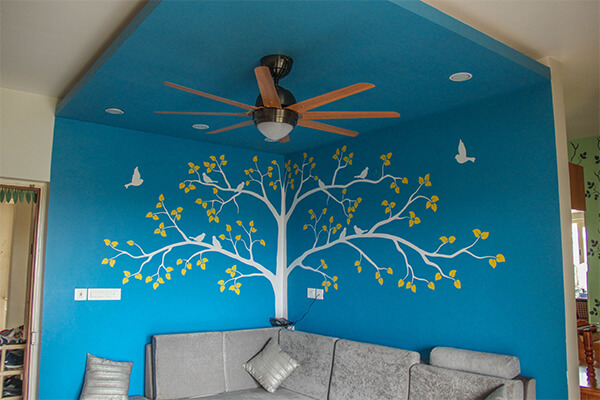
1. Moroccan trellis on living room accent wall — Apply a white trellis stencil over Asian Paints Teal Blast (7503) base coat. The contrast creates a resort-like feature wall that photographs beautifully.
2. Floral border at dado height in bedroom — Use a trailing floral stencil design as a horizontal border at 90 cm height, in Honey Mustard (7880) on white walls. Frames the room without overpowering it.
3. Geometric diamond pattern in kids’ room — Bright primary colours (ask dealer for codes) in a repeating diamond stencil create a playful, energetic feel. Easy to repaint as children grow.
4. Mandala stencil on bedroom headboard wall — A single oversized mandala centred above the bed, painted in Ivory (0315) on a warm Terracotta-N (427) base, creates a dramatic focal point.
5. Brick stencil pattern on kitchen feature wall — A faux brick stencil in earthy terracotta tones adds industrial-chic character to a modular kitchen without the mess of actual brickwork.
6. Herringbone stencil in entryway or corridor — The geometry of a herringbone pattern draws the eye along long corridors, making them feel wider and more intentional. Use Elegant Grey (8232) on a white base.
7. Paisley stencil in pooja room — Traditional paisley motifs in gold paint on a deep red or saffron base create a richly devotional atmosphere perfect for a home temple corner.
8. Ikat-inspired stencil in dining room — The rhythmic repeat of ikat patterns on a dining room accent wall connects modern aesthetics to Indian textile heritage.
9. Horizontal stripe stencil in bathroom — Wide horizontal stripes using tape or a stripe stencil in two tones of the same colour (light and dark grey, for instance) add visual height to a low-ceiling bathroom.
10. Tropical leaf stencil in balcony — Large-format tropical leaf stencils on the balcony wall in forest green create an indoor-garden feel, especially when paired with potted plants.
11. Star and moon stencil in children’s room — A celestial night-sky stencil in white or silver on Deep Sea Blue (9159) walls creates a magical bedtime atmosphere for young children.
12. Damask stencil in master bedroom — A classic damask stencil in Ivory (0315) on a Buttercup N (0336) base coat brings formal elegance to the master bedroom, echoing the look of premium wallpaper at a fraction of the cost.
13. Chevron stencil in home office — A bold chevron or arrow stencil pattern in a neutral-plus-accent palette (white + Teal Blast 7503) keeps a home office feeling energetic and productive.
14. Border stencil around doors and windows — Simple botanical or geometric border stencils framing doors and windows are a quick, impactful way to add architectural detail without hiring a carpenter.
15. Full-wall abstract stencil in living room — For the bold homeowner, a large-scale abstract stencil covering an entire living room wall in Honey Mustard (7880) or Terracotta-N (427) becomes the defining artwork of the space.
Stencil painting process — careful template placement gives clean crisp lines every time
Wall Stencil Design for Living Room: Room-by-Room Guide
The living room is where guests form their first impression of your home, making it the ideal canvas for a statement stencil design. For living rooms, choose large-format geometric or damask stencil patterns that can be seen from across the room. An all-over repeat stencil on the TV background wall, or a single large-scale motif on the sofa feature wall, are the two most popular approaches in Indian apartments. Pair the stencil colour with your sofa and curtain palette — Teal Blast (7503) stencils on white look stunning against grey or beige furnishings.
For the bedroom, softer, more intimate patterns work best. Floral stencil designs, mandalas, and trailing vine patterns in muted or pastel tones create a restful atmosphere. Avoid highly geometric or high-contrast patterns in the bedroom, as they can feel stimulating rather than calming. The headboard wall is the prime location for a bedroom stencil design.
In the kitchen, stencils are used in focused areas — typically the wall above the counter or a single panel between cabinets. Washable paints like Asian Paints Royale are essential here, as kitchen walls collect grease and need to be wiped down regularly. Tile stencils that mimic Portuguese or Spanish azulejo patterns are a trending option in 2026 Indian kitchens.
For kids’ rooms, go bold and playful. Jungle animals, cartoon motifs, alphabet stencils, and colour-block geometric patterns all work well. The advantage of stencilling over murals is that you can repaint and re-stencil as your child’s tastes change, usually within a single afternoon.
In corridors and entryways, border stencils at dado height (around 90 cm from the floor) are classic and timeless. They add architectural interest to otherwise-blank passageways without making them feel cluttered.
Stencil Colour: Choosing the Right Combination
The stencil colour choice is as important as the pattern itself. Here are the most popular stencil colour approaches in Indian interiors:
Tone-on-tone: Use a stencil colour just one or two shades darker or lighter than the base coat. The result is subtle and sophisticated — you see the pattern in raking light but it doesn’t dominate the room. Works beautifully in living rooms and bedrooms.
High contrast: White stencil on a dark base (or vice versa) creates maximum visual impact. Use this approach sparingly — ideally on just one accent wall — to avoid overwhelming the space.
Metallic accent: Gold, silver, or copper metallic paint as the stencil colour adds luxury and warmth. Particularly effective for mandala stencils, damask patterns, and festival-season feature walls.
Multicolour stencil: Some stencil designs are designed to be applied in two or three colours using multiple layers of stencilling. This creates rich, intricate effects similar to block printing. More time-consuming, but the results are stunning.
Stencil Painting Cost in India (2026)
| Type of Stencil Work | Cost (₹/sq ft) | Approx. Cost for One Accent Wall (100 sq ft) |
|---|---|---|
| Simple border stencil (single colour) | ₹8–15 | ₹800–1,500 |
| All-over geometric stencil (one colour) | ₹15–25 | ₹1,500–2,500 |
| Floral or intricate stencil design (single colour) | ₹20–35 | ₹2,000–3,500 |
| Metallic stencil (gold/silver paint) | ₹30–50 | ₹3,000–5,000 |
| Multi-colour layered stencil | ₹40–70 | ₹4,000–7,000 |
| DIY stencil (stencil kit cost only) | ₹500–2,000 per kit | Labour: your time only |
Note: Costs above are for stencilling only, over a pre-painted surface. If the wall needs to be base-coated first, add ₹10–18/sq ft for painting labour and material. Rates vary by city — Delhi and Mumbai tend to be 10–20% higher than smaller cities.
How to Apply a Wall Stencil Design: Step-by-Step
Stencilling is a beginner-friendly DIY project when done methodically. Here is the complete step-by-step process used by professional painters at AapkaPainter:
Step 1 — Prepare the wall. The base wall should be smooth, clean, and fully dry. A fresh coat of Asian Paints Royale or Tractor Emulsion is the ideal base. Rough, damp, or freshly-painted (less than 24 hours old) walls will cause the stencil paint to bleed or peel.
Step 2 — Plan the layout. Use a level and pencil to lightly mark reference lines on the wall — horizontal guidelines at the repeat distance of the pattern, and a vertical centre line. This prevents the design from drifting or going out of alignment across a full wall.
Step 3 — Fix the stencil. Use low-tack masking tape or a spray repositionable adhesive to secure the stencil flat against the wall. Do not use strong tape — it can pull off the base paint when removed.
Step 4 — Load the brush or roller. Use a stencil brush (round, stiff bristles) or a small foam roller. Load it sparingly with paint — tap off excess onto a paper plate until the application looks almost dry. This “dry brush” technique is the single most important step: too much paint causes bleeding under the stencil edges.
Step 5 — Apply paint in a dabbing or stippling motion. Work from the edges of the stencil opening inwards. Avoid wiping or brush strokes — use a light, up-down stippling motion. Apply two thin coats rather than one heavy coat for cleaner edges.
Step 6 — Remove the stencil carefully. Peel the stencil back slowly and immediately (while paint is still slightly wet) to avoid peeling the base coat. Wipe the back of the stencil with a damp cloth before repositioning for the next repeat.
Step 7 — Reposition and repeat. Align the stencil using the registration marks (small notches or holes cut into most commercial stencils) and continue across the wall. Work in sections of 3–4 repeats before stepping back to check alignment.
Step 8 — Touch up and seal. Once fully dry (2–4 hours), use a fine artist’s brush to touch up any bleed spots. For high-traffic areas or kitchens, apply a coat of clear matte sealer over the stencilled wall for durability.
Latest Stencil Designs for Walls in India (2026 Trends)
In 2026, interior designers across Mumbai, Delhi, Bengaluru, and Pune are embracing the following stencil design trends for Indian homes:
Biophilic stencil patterns — botanical leaves, vines, and nature-inspired motifs — are the top trending stencil design category, driven by the wellness interior movement. Large-scale tropical leaf stencils on terracotta or sage green bases are particularly popular.
Terracotta and earthy tone stencil colours dominate the 2026 palette. Terracotta-N (427) from Asian Paints, warm ochres, and rust tones pair beautifully with cream or white stencil patterns.
Mixed-media stencil walls combine stencil painting with texture paint (Royal Play) for a three-dimensional effect. A base texture coat is applied first, then a bold geometric stencil is overlaid in a contrasting shade, creating extraordinary depth.
Micro-pattern stencils — small, intricate repeat patterns that from a distance look like textured wallpaper — are trending in premium apartments. These require patience but the result is indistinguishable from imported wallpaper at a fraction of the cost.
Frequently Asked Questions About Wall Stencil Design
What is the best stencil design for a living room wall?
The best wall stencil design for a living room depends on the room’s size and style. For modern apartments, large-scale geometric patterns (Moroccan trellis, hexagon repeat) work well. For traditional homes, damask or ethnic block-print patterns are ideal. Choose a stencil large enough to be seen across the room — small repeats get lost in large living rooms. Pair with a bold stencil colour like Teal Blast (7503) or Deep Sea Blue (9159) for maximum impact.
How do I choose the right stencil colour?
Stencil colour should complement your existing room palette. The safest approach is tone-on-tone — use a shade 2–3 steps darker than your base wall colour. For drama, use high contrast (white on dark, or metallic on dark). Always test the stencil colour on a small hidden section of wall before committing to the full design.
Can I do stencil painting myself or should I hire a professional?
Stencil painting is one of the more DIY-friendly wall art techniques for beginners. Simple border stencils and single-colour geometric patterns can be done at home in a weekend with a basic stencil kit (available from Rs. 500 online). For intricate multi-colour stencil designs, metallic finishes, or full-room applications, hiring a professional painter ensures cleaner edges and better alignment. AapkaPainter offers stencil painting services across Pune, Mumbai, Bengaluru, Hyderabad, and other major cities.
How long does stencil painting on walls last?
A well-applied stencil design on properly prepared walls, using quality paint like Asian Paints Royale, can last 5–7 years without touch-ups. Sealing with a clear matte varnish extends durability further, especially in kitchens and bathrooms. Avoid wiping stencilled walls with abrasive materials.
What is the cost of stencil painting in India in 2026?
Stencil painting costs in India range from ₹8–70 per sq ft depending on complexity — simple single-colour geometric stencils start at ₹8–15/sq ft, while intricate multi-colour or metallic stencils cost ₹40–70/sq ft. For a 100 sq ft accent wall, budget between ₹1,500 and ₹7,000 for stencil work alone (not including base coat). Costs are slightly higher in metro cities like Mumbai and Delhi.
What are the latest stencil designs for walls in 2026?
The latest stencil designs for walls in Indian homes in 2026 include: biophilic botanical leaf patterns, Moroccan trellis on earthy base colours, mixed-media texture-plus-stencil combinations, micro-pattern repeats that mimic wallpaper, and traditional Indian motifs (block print, mandala, ikat) reinterpreted in contemporary colour palettes. Terracotta, sage green, and warm mustard are the trending stencil colours.
Which Asian Paints shade works best as a stencil base coat?
For most stencil designs, white (Royale White) or a light neutral base gives the most flexibility with stencil colour. If you want a more dramatic base, Ivory (0315), Buttercup N (0336), or Elegant Grey (8232) from Asian Paints Royale are popular in Indian homes. Always apply a primer before the base coat for better stencil adhesion and cleaner edges.
Is stencil painting better than wallpaper?
Stencil painting has several advantages over wallpaper for Indian homes: it costs 60–80% less, handles Indian humidity far better (wallpaper peels in humid climates), is fully customisable in terms of pattern and colour, and can be repainted or changed easily. The main advantage of wallpaper is the wider range of photographic and textured finishes. For most Indian homeowners, stencil painting is the smarter, more durable, and more cost-effective choice.
Can stencil painting be done on textured walls?
Stencilling is most effective on smooth walls. Lightly textured walls (like sand finish emulsion) can work if you press the stencil firmly and use a stippling brush. Heavy texture finishes (like Royal Play stone effects) are not suitable for stencilling — the raised texture prevents the stencil from lying flat, causing significant paint bleed. For textured walls, consider painted borders or block-printed fabric panels as alternatives.
How do I fix mistakes in stencil painting?
Minor bleed spots can be touched up with base coat colour and a fine brush once the stencil paint is dry. For larger mistakes, let the paint fully cure (24 hours), then paint over with base coat and re-stencil. The key to avoiding mistakes is using very little paint on the brush — a “dry” brush technique eliminates 90% of bleed problems.
Get Professional Stencil Painting with AapkaPainter
AapkaPainter’s professional painters are trained in stencil painting techniques across all pattern types — geometric, floral, traditional, and metallic. Whether you want a single accent wall or a full-room stencil design, we handle everything from surface preparation and base coating to precise stencil application and finishing.
We serve homeowners across Pune, Mumbai, Bengaluru, Hyderabad, Ahmedabad, Nagpur, Nashik, Kolhapur, and Aurangabad. Get a free home visit and quote for your stencil painting project at aapkapainter.com.